SPRING 2008

Uncovering the real cost of rehab

4/10/2008 12:45:31 PM | by Rachel Stowe Master 91 | PRINT VERSION | PDF VERSION

What’s the bottom line to running a drug treatment program? Patrick Flynn found out.

When TCU’s Institute of Behavioral Research began its Treatment Costs and Organizational Monitoring (TCOM) project five years ago, researchers wanted to build upon the institute’s nationally acclaimed work in drug addiction treatment by bringing in cost analysis. They expected some interest by care providers, but didn’t anticipate the project’s reception: At the front end, programs were clamoring to be included in the study, and now that research is wrapping up, care providers, policy makers and even economists can’t seem to get their hands on the data fast enough.

In the treatment of drug addiction, all players are eager for tools to improve outcomes. And improving treatment is at the heart of all work at the IBR.

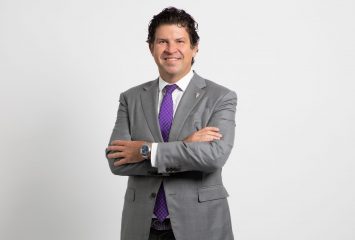
Patrick M. Flynn, IBR deputy director and professor of psychology, serves as principal investigator on the TCOM project, which is working with a sample of 115 drug-free (nonmethadone), community-based, outpatient drug addiction treatment providers to develop assessment and information systems that monitor organizational factors and program resources — and linking them to client outcomes. Organizational attributes and client information are then integrated with financial resources data to understand how the treatment process and organizational change occur. IBR chose outpatient treatment centers because more than 80 percent of substance abuse treatment in the United States occurs in outpatient programs.

It’s work IBR is naturally suited for. One of the nation’s few longstanding research institutes focused on drug addiction treatment, it quietly goes about its work on campus but is renowned nationally and internationally.

“The IBR has a 35-year history of national research in addiction treatment effectiveness. We have delved into what makes treatment work and how to make it better,” said D. Dwayne Simpson, IBR director and the S.B. Sells distinguished professor of psychology and addiction research at TCU. “Our recent findings also show that organizational readiness and functioning must be considered in the growing national agenda for adopting ‘evidence-based practices’ that improve health services, and Dr. Flynn’s work is now beginning to add crucial cost-related information into this formulation. For national policy and budget planning, this has major implications.”

In December, Flynn got a glimpse of the significance of the IBR’s work at a meeting sponsored by the National Institute on Drug Abuse in Washington, D.C. Flynn was invited for his treatment expertise — the other 20 or so invitees were economists.

“Throughout the day-and-a-half meeting, a number of economists who were doing their presentations basically said, ‘In order to do the economic work that we need and want, we need information on cost of treatment, we need information on organizations and we need information for case mix adjustment,’ which means information on clients and different programs,” Flynn said. “And no one has this data — that I can tell — except us. By the end of the meeting, I realized how valuable our data is and how more valuable it’s becoming.”

The TCOM project, which began in 2003 and was backed by a five-year, $3.2 million grant from the National Institute on Drug Abuse has already garnered 12,500 client assessments, a couple hundred cost workbooks, and close to 1,500 organizational surveys from staff of the participating programs.

“I guess the final measure of success will be in terms of our professor journal publications that will come out in the next year, year and a half. We have several publications already completed,” Flynn said.

Unusual Recruiting Methods
From the beginning, the project has met with enthusiasm from the field. The research team planned to work with Addiction Technology Transfer Centers — a national network of 14 regional centers dedicated to advancing addiction treatment — to recruit programs.

“We had selected two of the ATTCs to work with, and by the time we got funding for the study and word got out we had a number of programs from different areas of country that were e-mailing and asking to participate in our study,” Flynn said. “We hadn’t even advertised the study and they were from different regions than we planned on going into.”

For example, Florida wasn’t initially going to be part of the sample, but a large agency from that state asked to participate. “I said we’d like to have you but we need other programs in Florida, and they offered to recruit programs for us,” Flynn said. “So we ended up with 20 to 25 programs from the state of Florida that were recruited by programs themselves.”

Same story for the Great Lakes Region when an individual working in a hospital-based program contacted IBR. The ATTC in that region sent out a notice about the study, resulting in “a snowball effect from programs in Illinois, Ohio and Wisconsin,” Flynn said.

“We had programs knocking on our door to participate in our study,” he said.

Invaluable Feedback
One of the specific goals of the TCOM project was to develop a set of field instruments and procedures that treatment programs could use to assess their organization and its resources.

Over the years, IBR has used federal dollars to develop a number of manuals, assessments and tools, which are free downloads from its Web site. For the TCOM project, it wanted to develop a cost analysis tool that programs could self-administer.

 “We developed the first self-administered costing tool for getting service level costs — costs of a counseling hour, costs of a group counseling hour per client, cost of an enrolled day and a cost of a treatment episode,” Flynn said.

Working with colleagues at Brandeis University in Massachusetts, IBR developed a Microsoft Excel-based costing tool that programs can use to gather information about labor costs, non-personnel costs, client flow information and more. The workbook then generates cost reports on various service level costs as well as comparison charts and bar charts that use data from a national study for a comparison point on factors like labor costs or percentage of labor breakdown.

In all, IBR developed three major assessment instruments for the project: an initial survey of structure and operations, a survey of organizational functioning and the “TCAT” cost analysis tool. It also used an existing instrument called the TCU Client Evaluation of Self-Treatment, which captures client level information that is then aggregated at the program level.

While IBR is collecting research data for its project, participating drug addiction treatment centers are gaining invaluable feedback.

“We give them reports back on what their organization looks like based on their organizational assessment and cost analyses,” Flynn said. “Programs automatically get back cost reports with bar charts for comparison purposes. With the client information, we also send back aggregate reports for the program showing what their client makeup looks like, what the profile of their clients looks like — and in comparison with the other programs that are participating in the study.”

Special Challenges
At the beginning of the project, Flynn and his team — which includes Danica Knight, TCOM project director; Kirk Broome, the statistician and methodologist for TCOM; and Jennifer Edwards, a graduate research assistant — trained financial officers, program directors and clinical directors on how to use the assessment system. An initial challenge of working in the costing arena was designating a unit of analysis — or cost center.

Researchers discovered that many programs were mixed treatment modalities, meaning they offered both regular outpatient services as well as intensive services, which require more hours of service a week.

“So a challenge for us was getting down to the unit of analysis and the cost center and getting programs to understand,” Flynn said. “And it became an education process. We learned a lot along the way, and a number of programs that had never been involved in costing their services were learning and changing some of their practices — hopefully for the better.”

As an incentive, IBR provided a new computer to participating programs after they completed some of the data collection.

“The programs have very little technology,” Flynn said. “So that was one more contribution we could make in terms in technology.”

Economies of Scale
Though 115 outpatient treatment centers across the country are already seeing improved practices from their participation in TCOM, IBR is only starting to draw its conclusions.

“We’re just finishing up our data collection in the field and beginning our analyses,” Flynn said. “We’re finding some interesting relationships.”

At the National Institute on Drug Abuse meeting Flynn attended in December, he learned that economists and state governments are interested in studies involving economies of scale in drug-addiction treatment services.

“If the economic principle of economies of scale holds true, then some of the their analyses might end up suggesting mergers between programs to make a bigger organization, which may be more efficient and more cost effective,” Flynn said.

However, some IBR results show that while size is an important factor, smaller programs that are higher quality — indicated by accreditation, skilled staff, better organizational climates, more communal workplace practices — are more successful at “engaging their clients,” Flynn said.

“We know from our past research that the amount of time in treatment is highly correlated with better outcomes,” Flynn said. “The greater length of stay someone has in treatment, the better they’re going to do after treatment.”

These findings are significant when analyzing economies of scale, illustrating that in substance addiction treatment, bigger isn’t necessarily better.

“The economists are interested in management production functions and producing — as they describe it — widgets. But in treatment, our widgets aren’t simple mechanisms,” Flynn said. “We’re dealing with individuals who have thoughts, cognitions, emotions and behaviors, and they interact with the treatment system, with the program, with the operations, with the staff and management, with the outside world. They come in with different levels of motivation and problem severity. So what we’re doing is much more difficult than trying to manufacture an iPod or something like that.”

TCOM: The Next Five Years
Flynn plans to continue developing costing tools to help drug addiction treatment centers. He is already working with Broome, who submitted a letter of intent to the Robert Wood Johnson Foundation for support of costing tool development, and the TCOM research team also hopes to secure funding to continue that project.

“The goals for the continuation of the project are similar to these — to help improve treatment — but we’re going to focus on leadership training with program directors and clinical staff as well as try to refine reports and feedback mechanisms to apply some of best practices from marketing research, to get input from the field to help design better reporting packages and to give [treatment centers] information they can use in their programs,” he said.

In addition, Flynn hopes to pursue studies with economists and develop stronger links with the Neeley School of Business.

“I’d like to approach drug abuse treatment from a business standpoint — not just from a clinical reference point — to help clinics develop better practices and put best practices in place,” he said. 

 He will also continue his work with co-occurring disorders.

“A large percent of individuals entering treatment for substance abuse problems also have mental health problems,” he said.

Currently, there are two separate systems: a mental health treatment system and a substance abuse treatment system.

“Some individuals with mild to moderate mental health problems can receive good and adequate treatment in the substance abuse treatment system, but when individuals show up with more severe mental health problems and issues, they really need to go into the mental health system,” Flynn said, noting that last year he had the opportunity to do a congressional briefing on this topic. “Hopefully there are some things I can to do in the future to impact that field and see what we can do about providing more and better services for individuals with co-occurring disorders.”

More at www.ibr.tcu.edu/ and www.ibr.tcu.edu/persons/flynn.html

Deputy Director and Professor of Psychology Pat Flynn joined the IBR in July of 2000. His research has focused on the effectiveness and benefits of treatment, and included clinical assessment, questionnaire development, and multi-site clinical trials and survey research. He is a Fellow in several divisions of the American Psychological Association, a frequent member of federal grant review panels, a regular reviewer for professional journals, and has served as chairperson of an NIH health services research study section. He served on the NIH/NIDA Health Services Research Initial Review Group for a term of 2004 through 2007.  Since 1990, when he returned to the research environs, he has been the Principal Investigator/Project Director and Co-Director of national outcome studies, and a Co-Principal Investigator and key investigator for a number of other treatment studies. He is currently principal Investigator on a NIDA project designed to develop and implement a treatment cost and organizational monitoring system. Prior to his return to full-time research, Dr. Flynn worked in therapeutic community, methadone, and outpatient drug-free treatment programs in several capacities, and served in upper-level management positions in higher education. His past academic positions and appointments have included tenured associate professor, college vice president, and dean of academic affairs.